Have you ever looked at a beautiful piece of traditional Chinese clothing and wondered, “How on earth is that put together?”
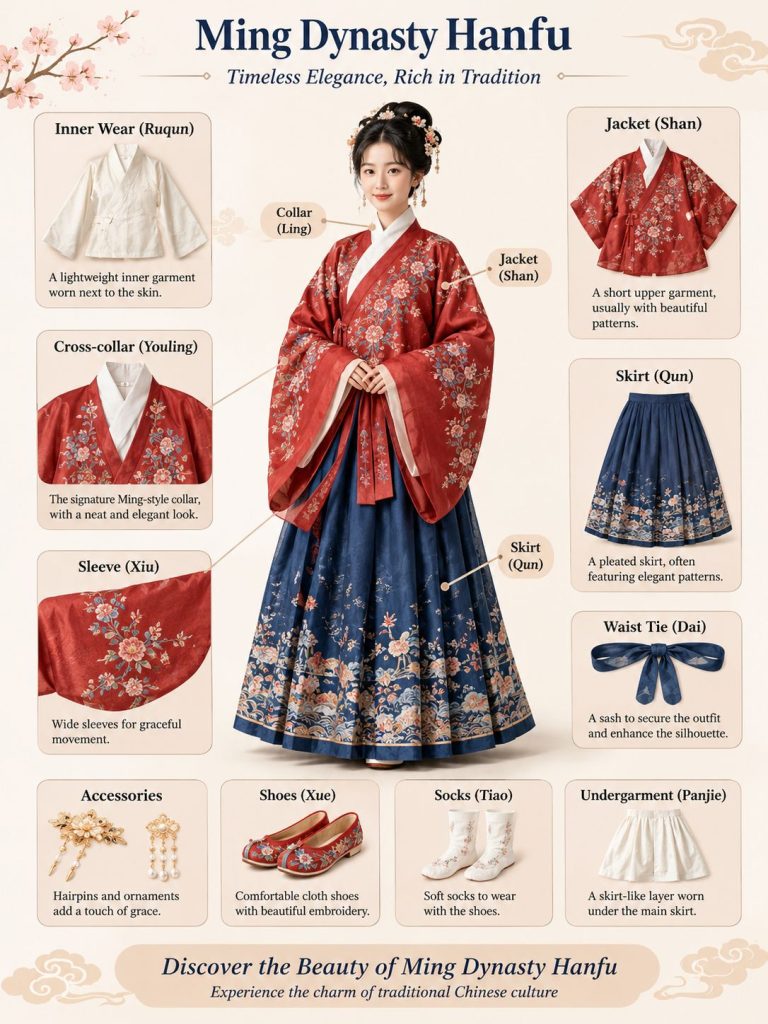
Hanfu is not just a single dress; it is a complex, layered system of garments that has evolved over thousands of years. Among the many historical periods, Ming Dynasty Hanfu (1368–1644) is arguably one of the most popular and recognizable styles today. Known for its structured silhouettes, rich embroidery, and practical elegance, the Ming style is a favorite among modern Hanfu enthusiasts.
In this guide, we will break down the anatomy of a classic Ming Dynasty outfit piece by piece. Whether you are looking to buy your first set on Amazon or just want to understand the cultural details, this chart-based breakdown will help you know exactly what you are looking at.
1. The Core Layers: What Goes Next to the Skin?
Unlike modern clothes, Hanfu is built on layers. The base layers are crucial for comfort and hygiene.
- Inner Wear (Ruqun / 内搭): This refers to the lightweight, usually white, top garment worn directly next to the skin. It protects the outer, heavier clothing from sweat and body oils.
- Undergarment (Panjie / 袢解): Pictured at the bottom right of our chart, this is a skirt-like layer worn underneath the main skirt to provide volume and prevent the outer silk or cotton layers from clinging to your legs. (💡 Shop comfortable cotton inner layers on Amazon)
2. The Upper Body: The Signature Jacket (Shan)
The most defining feature of Ming Dynasty fashion is the upper garment, often called a Shan (衫) or Ao (袄).
- The Collar (Ling – 领): The Ming style is famous for its Cross-collar (Youling – 右衽). The left side of the garment wraps over the right side, forming a distinct “y” shape. This is a hallmark of Han Chinese clothing.
- The Jacket (Shan): Typically, this is a short jacket that falls around the hip or waist. It can be sleeveless or have long, wide sleeves.
- Sleeves (Xiu – 袖): Wide sleeves are a symbol of grace. In the Ming Dynasty, the sleeves were often wide but tapered at the wrist for practicality, allowing for beautiful movement without getting in the way.
- Waist Tie (Dai – 带): A long sash is tied around the waist to secure the jacket and enhance the body’s silhouette.
(💡 If you are looking for an easy-to-wear top, check out these modern Ming-style tops on Amazon)
3. The Lower Body: The Iconic Pleated Skirt (Qun)
You cannot talk about Ming Dynasty Hanfu without mentioning the skirt. The most famous is the Ma Mian Qun (Horse-Face Skirt), which is a type of Qun (裙).
- The Skirt (Qun): As seen in the chart, the skirt is voluminous and heavily pleated. Historically, these skirts were made with incredibly intricate embroidery at the hem.
- Why it’s great for beginners: The structured pleats make it look formal and elegant, but it can be easily paired with a modern white shirt or sweater for daily wear.
(💡 Browse beautiful pleated Ma Mian Qun skirts on Amazon)
4. Completing the Look: Footwear and Accessories
A Ming Dynasty outfit is not complete without the right accessories.
- Accessories: The chart highlights ornate hairpins and ornaments. In the Ming dynasty, gold and pearl hairpins were highly favored. Today, a simple tassel hairpin can instantly make you look like you stepped out of a historical drama.
- Socks (Tiao – 袜): Soft, often white cotton socks.
- Shoes (Xue – 鞋): Traditional cloth shoes with beautiful embroidery. While you can certainly wear these, many modern Hanfu wearers opt for simple cloth flats or even white sneakers for comfort!
(💡 Shop traditional embroidered cloth shoes here)
How to Style Ming Dynasty Hanfu Today
The beauty of the Ming style is its versatility. Because the jacket (Shan) is short and the skirt (Qun) is structured, it bridges the gap between historical and modern fashion.
Pro Tip for Beginners: If you are buying your first Ming Hanfu on Amazon, look for “Modern Hanfu” or “Ming-style sets.” These often feature hidden zippers or elastic waistbands, making them much easier to put on than authentic historical ties.
Final Thoughts
Understanding the anatomy of Hanfu makes shopping for it much less intimidating. From the cross-collar jacket that wraps your upper body to the flowing pleated skirt that sways with every step, every piece has a purpose and a history.
Ready to start your Ming Dynasty journey? Explore our Best Hanfu for Beginners to find the perfect set, or check out our Hanfu Accessories Guide to find the perfect hairpins to complete your look!
(As an Amazon Associate, we earn from qualifying purchases.)


Leave a Reply
You must be logged in to post a comment.