Hanfu (汉服) is experiencing a massive global resurgence. With its elegant silhouettes and rich cultural heritage, it’s no wonder more and more people outside of China are looking to add a piece to their wardrobe.
However, if you are browsing online for your first Hanfu, the sheer variety can be overwhelming. “Which style should I pick?” “Will it fit right?” “Is it comfortable enough to wear all day?”
This guide is designed to help you navigate the basics. We will break down the most beginner-friendly Hanfu styles and give you practical tips on how to choose one that looks great and feels comfortable.
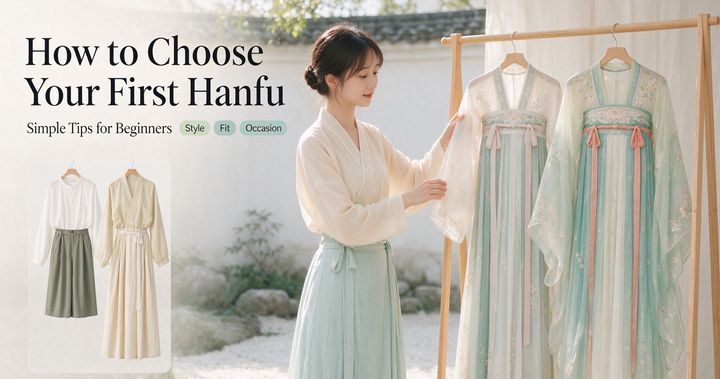
1. The Best Hanfu Styles for Beginners
The key to a great first Hanfu is to start with a style that is easy to put on and suitable for modern environments.
The Ming Dynasty Ma Mian Qun (Horse-Face Skirt)
Best for: Versatility and a structured look.
The Ma Mian Qun (马面裙) is a pleated skirt that became highly popular during the Ming dynasty. It is arguably the most beginner-friendly piece today.
- Why it works: It pairs perfectly with a modern shirt or sweater. You don’t need to wear a full set of traditional layers to look good.
- The Vibe: Elegant, structured, and very photogenic.
- Pro Tip: Look for skirts with adjustable waist ties rather than fixed zippers for a more forgiving fit.
The Song Dynasty Beizi (Jacket)
Best for: Everyday wear and a minimalist aesthetic.
The Song dynasty is known for its minimalist and elegant fashion. The Beizi (褙子) is a parallel-collar jacket that is often worn over a simple top.
- Why it works: The straight, loose cut is incredibly comfortable and flattering on almost all body types. It’s essentially a versatile, flowy cardigan with cultural roots.
- The Vibe: Understated, graceful, and comfortable.
The Ru Qun (Top & Skirt)
Best for: The classic, fairytale Hanfu silhouette.
The Ru Qun (襦裙) consists of a short jacket or shirt (Ru) tucked into a long skirt (Qun).
- Why it works: It’s the quintessential Hanfu look.
- A warning for beginners: Some styles, like the Qixiong Ruqun (chest-high skirt), can be tricky to tie securely and might slip if not adjusted properly. For your first purchase, look for a Qiyao Ruqun (waist-high skirt), which is much easier to manage.
2. Fabric Matters: What to Look For
When buying online, you can’t touch the fabric. But you can read the descriptions.
- Avoid cheap polyester (satin/silk imitations) if possible. They often trap heat and can look shiny and costumey.
- Look for blends with cotton, linen, or high-quality chiffon. These breathe better and drape more naturally, making them ideal for daily wear.
3. Sizing: How to Get It Right
Asian sizing runs significantly smaller than Western sizing. The “XL” in a Chinese Hanfu store might fit like a “Medium” in the US or Europe. Always go by the specific measurements on the seller’s size chart, not your usual size.
Here are the three measurements you need to take before ordering:
- Bust/Chest: Measure around the fullest part of your bust. Keep the measuring tape parallel to the floor.
- Waist: Measure around your natural waistline (the narrowest part of your torso).
- Height: This is crucial because many traditional skirts are very long. Check the length of the skirt in the product description and compare it to your height plus heel height.
(To ensure a perfect fit, check the product reviews on Amazon to see if the item runs small or large. [Check out our curated list of beginner-friendly Hanfu here])
4. Essential Accessories to Complete the Look
You don’t need a full historical ensemble to look great. A few small accessories can elevate your outfit instantly.
- Hairpins: A simple tassel or floral hairpin can transform a basic hairstyle. (Link to Amazon accessories)
- Waist ornaments: A belt or a jade pendant adds detail to a plain skirt.
- Hanfu Shoes: While traditional embroidered shoes are beautiful, a pair of simple cloth flats or even modern canvas shoes work perfectly for a casual look.
Final Thoughts
Buying your first Hanfu should be an exciting experience. Don’t overthink the historical accuracy—focus on what makes you feel beautiful and comfortable. Start with a versatile piece like a Ma Mian Qun or a Beizi, pay attention to the size chart, and embrace the beauty of traditional Chinese fashion in your own way.
Ready to start shopping? Explore our top picks for beginner Hanfu on Amazon and find your perfect first piece.
(As an Amazon Associate, we earn from qualifying purchases.)
Leave a Reply
You must be logged in to post a comment.