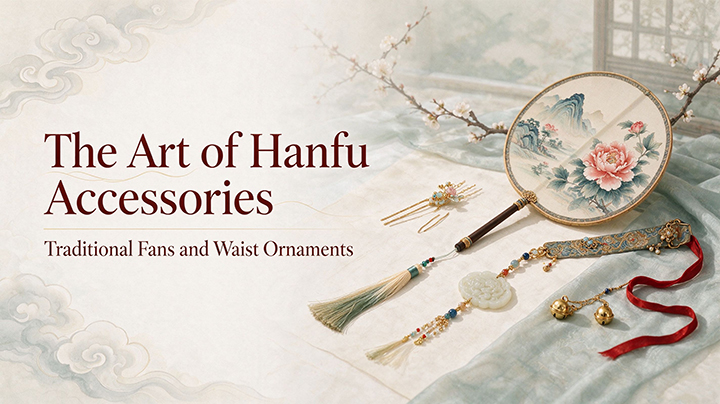
When building a Hanfu outfit, the garments themselves are only the canvas. The true personality of your look comes from the Hanfu accessories you choose.
While hairpins are essential, there are two other categories of accessories that instantly elevate a simple Hanfu into a breathtaking, historical ensemble: Fans (扇子) and Waist Ornaments (腰佩).
These are not just pretty objects; they carry centuries of Chinese history, symbolism, and etiquette. Here is your guide to understanding, choosing, and wearing traditional Chinese fans and waist ornaments.
1. The Elegant Art of the Chinese Fan
In ancient China, a fan was never just a tool for cooling down. It was a symbol of status, a canvas for art, and a vital prop in social interactions. For Hanfu wearers today, a fan is the ultimate finishing touch.
There are two main types of fans you will see paired with Hanfu:
The Round Silk Fan (Tuan Shan – 团扇)
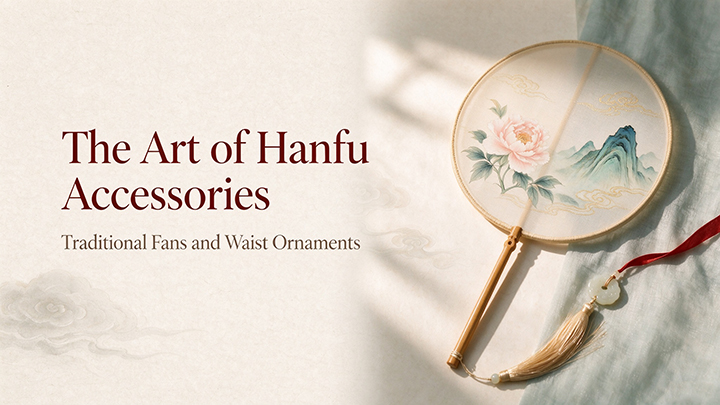
Also known as the “palace fan,” this is a flat, rigid fan shaped like a circle (or sometimes a flower or a moon). The frame is usually made of bamboo, and the surface is covered in pure white silk or paper.
- The Art: These fans are often hand-painted with delicate landscapes, plum blossoms, or birds. Sometimes, exquisite silk embroidery is added.
- The Vibe: Femininity, grace, and a gentle, quiet elegance. It is the perfect accessory for Song or Tang dynasty styles.
- How to style it: Hold it lightly near your collarbone with both hands, or gently fan yourself. It is incredibly photogenic.
(💡 Shop beautifully embroidered round silk fans on Amazon here)
The Folding Fan (Zhe Shan – 折扇)
Introduced to China from Japan during the Song dynasty, the folding fan became incredibly popular among Chinese scholars and noblemen.
- The Art: The fan is made of paper or silk stretched over bamboo or wooden ribs. The front is often adorned with traditional Chinese calligraphy (poetry) or ink-wash paintings.
- The Vibe: Intellectual, masculine, and dashing. It pairs perfectly with Ming dynasty styles or male Hanfu.
- How to style it: The folding fan isn’t just for cooling; it’s a prop for body language. A sharp snap of the wrist to open the fan is a classic way to show a confident, scholarly attitude.
2. Waist Ornaments: The Tinkling Grace of Jade (Yao Pei)
If you look at historical Chinese paintings, you’ll notice people wearing intricate ornaments hanging from their waist. This is the Yao Pei (腰佩) or Jin Bu (禁步).
Historically, these were worn by nobles and scholars. The ornaments were strung together with jade pieces, pearls, and silk tassels. The purpose was not just decoration—the soft, rhythmic tinkling sound they made when the wearer walked was a reminder to walk with grace and proper speed. If you walked too fast or too clumsily, the tassels would tangle and the sound would become chaotic.
- Jade Pendants: The most traditional material is Hetian jade. Jade represents purity, beauty, and moral integrity in Chinese culture.
- Tassels: The long, flowing silk tassels add movement and a pop of color to your outfit.
- How to style it: Hang it from your waist sash (Dai). It looks absolutely stunning when worn over a pleated skirt (like a Ma Mian Qun) or a flowing Tang-style dress.
(💡 Find exquisite traditional jade pendants and tassel waist ornaments on Amazon)
3. Other Essential Hanfu Accessories to Consider
Beyond fans and waist ornaments, there are a few more small details that can bring your outfit to the next level:
- Pheasant Tail Hairs (Lingzi): These are long, feather-like ornaments that hang from the hair. They add a dramatic, wind-catching element to the silhouette.
- Hanfu Shoes (Xue): Traditional embroidered cloth shoes with flat soles. While modern sneakers are fine for daily wear, a pair of embroidered shoes completes the historical look for a photoshoot.
- Bags: Instead of a modern purse, consider a small embroidered pouch (He Bao) tied to your waist sash, or a woven bamboo basket.
(💡 Complete your look with traditional embroidered cloth shoes on Amazon)
4. A Quick Buying Guide
When searching for these accessories online (especially on Amazon or Etsy), keep these tips in mind to avoid cheap-looking items:
- For Fans: Look for real silk or quality paper, not cheap plastic. Read the reviews to ensure the folding fans “snap” open smoothly and the round fans have a sturdy bamboo handle.
- For Waist Ornaments: Check the length. Some traditional ornaments are very long and might drag on the floor if you are short. Look for adjustable strings or modern clasp versions if you need a secure fit.
- Watch the Details: Beautiful accessories have clean tassels (not frayed) and neat metalwork (avoid metals that look overly brassy or cheap).
Final Thoughts
Accessories are what separate a good Hanfu outfit from a spectacular one. A beautifully painted silk fan or a delicate jade waist pendant doesn’t just make you look good; it connects you to the elegant lifestyle and etiquette of ancient China.
Ready to find the perfect finishing touch for your outfit? Explore our Top Picks for Hanfu Accessories to start shopping, or check out our Best Hanfu for Beginners to find the perfect dress to pair them with!
(As an Amazon Associate, we earn from qualifying purchases.)
Leave a Reply
You must be logged in to post a comment.